
Branded partnerships are at their strongest when they balance cultural credibility with commercial return. Whether it’s a bank supporting a major exhibition or a lifestyle brand backing a music festival, the advertising strategy needs to deliver attendance, brand lift and measurable ROI for both sides.
Start with Shared Objectives Then Add Partner-Specific KPIs (IncludingROAS)
Everysuccessful branded partnership begins by aligning on one shared purpose. Butunderneath that purpose sit two sets of KPIs one for the cultural partner, onefor the commercial brand.
Shared Objective Example
“Driveattendance while strengthening the brand’s cultural association and communityimpact.”
Partner-Specific KPIs
For Arts & Culture Partners
- Ticket sales and attendance
- ROAS (Return on Ad Spend) for paid media driving conversions
- Memberships, donations or repeat visit signals
- Growth in cultural audience segments
Why ROASmatters here: Branded partnerships often unlock larger budgets and more premium creative assets. Measuring ROAS ensures that investment translates into real-world footfall and revenue.
For the Commercial Brand
- Brand awareness & recall
- Positive brand sentiment uplift
- Data capture (sign-ups, downloads, email growth)
- New customer acquisition or qualification
- Association with culture & creativity (brand equity gains)
New KPI: Partnership Effectiveness
A shared metric evaluating how well the collaboration works overall:
Cross-channel creative consistency
- Earned media generated because of the partnership
- Co-branded content performance
- Social sharing and organic brand mentions
This isincreasingly important as brands look beyond impressions to long-term brandvalue.

Budget Split: The 60/40 Framework That Protects Cultural Storytelling
Branded partnerships work best when budgets reflect both the shared story and theindividual goals.
60%: Joint Storytelling & Co-Branded Reach
Where thepartnership comes to life:
- Co-branded video campaigns
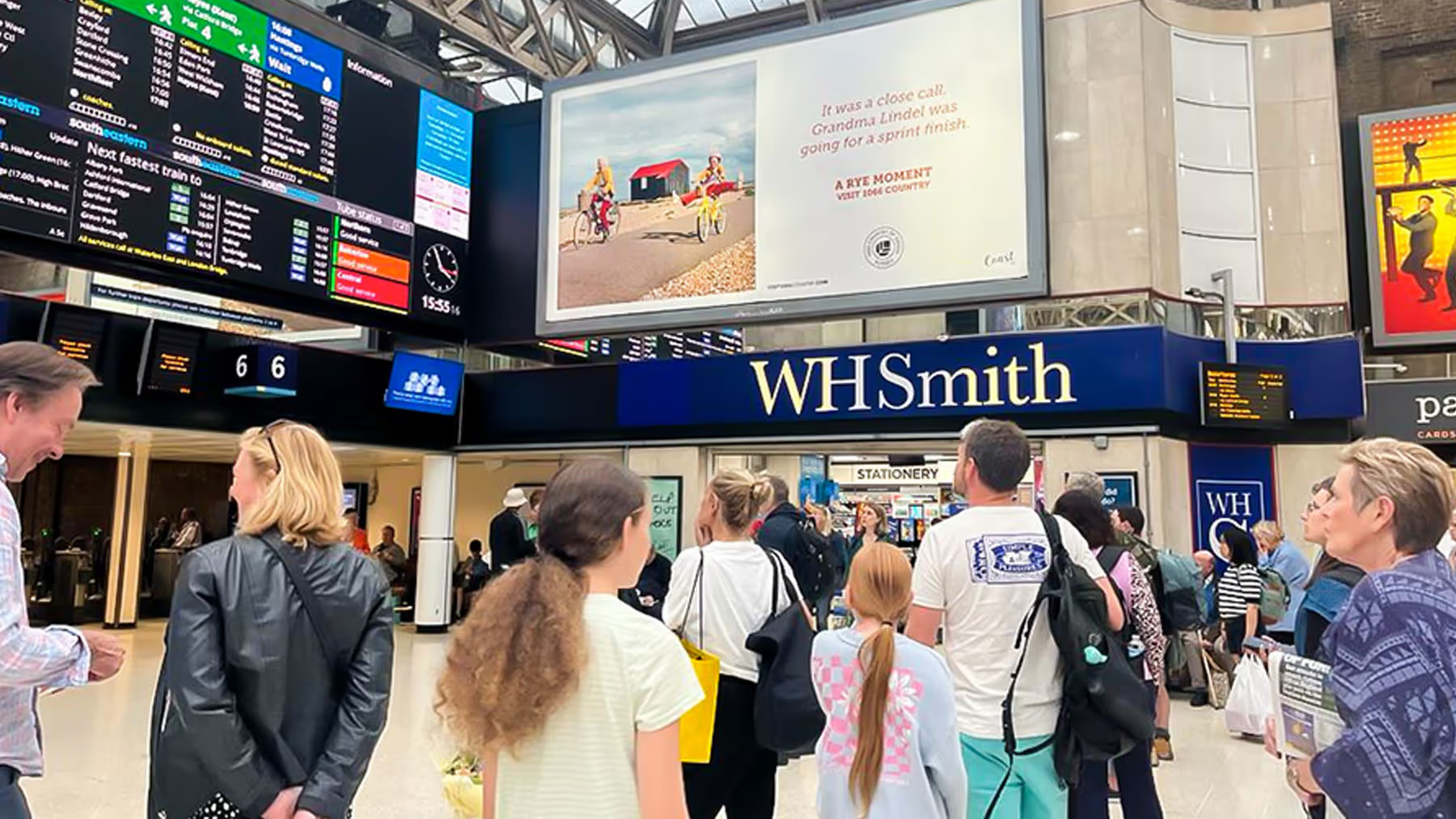
- Digital OOH around the venue
- Press partnerships
Purpose: Build emotional connection, elevate the brand’s cultural credibility and drive broad awareness.
40%: Partner-Specific Performance Campaigns
- For the cultural partner: Conversion-driving ads (ROAS, ticket sales, on-site attendance).
- For the brand: Brand lift-focused placements and CRM audience activation.
This model ensures neither partner’s objectives overshadow the other while keeping cultural value at the core.
Audience Targeting: Start with Overlap, Grow Through Extensions
Step 1: Identify Shared Audiences
Use CRM, platform insights and look alikes to find natural crossovers (e.g., urban creatives, young professionals, cultural families).
Step 2: Build Extended Audiences
- Culture partner: Local families, students, tourists, arts enthusiasts.
- Brand partner: Loyalty members, premium customers, category lookalikes.
Step 3: Match Tone & Creative to Each Segment
- Co-branded storytelling for shared groups.
- Tailored messaging for individual KPIs (e.g., “Exclusive [Brand] benefits” vs. “Book now for this season’s must-see exhibition”).
Measurement: A Unified Dashboard with ROAS Built In
Measurementneeds to serve both parties while proving the value of the partnership.
Joint Metrics
- Total reach and engagement
- Earned media & social buzz
- Brand lift results
- Partnership effectiveness score
Brand Metrics
- Sentiment shift
- Customer acquisition
- Cultural association uplift
Culture Partner Metrics
- ROAS for conversion ads
- Ticket sales & attendance patterns
- Booking window behaviour
- Membership & donation uplift
ROAS is especially important for evaluating how co-branded campaigns translate intoreal-world footfall.

Creative Synergy: Where Partnerships Deliver Their Greatest ROI
The mosteffective branded partnerships blur the line between marketing andstorytelling.
Examples:
- A fashion brand producing behind-the-scenes exhibition films placed across both partners’ channels.
- A museum showcasing the brand’s values (innovation, sustainability, craftsmanship) through curated programming.
- Artist or talent collaborations that create new content shaped around the shared theme.
These collaborations deepen cultural impact and elevate brand memorability improvingboth ROAS and brand equity.
Branded partnerships work because they combine brand scale with cultural authenticity. By introducing ROAS into cultural KPIs and designing measurement around sharedvalue, these campaigns deliver powerful results: higher attendance, strongerbrand equity and deeper community impact.